
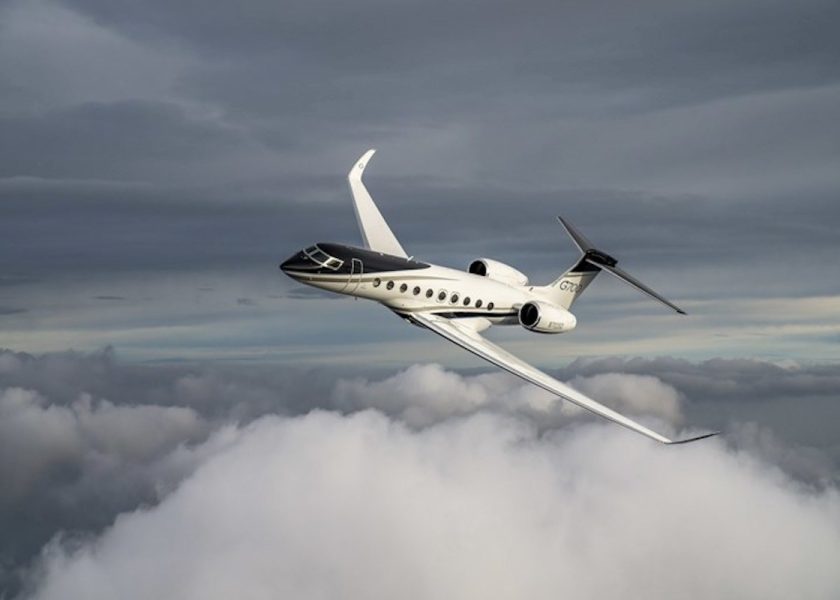
In the realm of high-end travel, the very definition of luxury is undergoing a quiet yet profound metamorphosis. Gone are the days when status was measured solely by the suppleness of leather seats, the grade of the Caviar, or the vintage of the Champagne.
Today, the global elite – those holding the “ticket” to First Class or the keys to a Private Jet- are gravitating toward a higher value: Conscious Luxury. They desire to traverse the skies, yet they refuse to leave lasting scars on the atmosphere. This has signaled the start of the race to “green” the skies, forcing luxury aviation leaders to solve a complex equation: How do we minimize our Carbon Footprint without sacrificing a single ounce of passenger comfort?
Aviation, particularly the luxury and General Aviation sectors, has long been stigmatized as an environmental culprit. A private jet flight can emit significantly more CO2 per capita compared to commercial aviation. For the ultra-high-net-worth individual, this creates an “ethical paradox.” They cherish privacy, speed, and convenience, yet they are often the most acutely aware of the legacy they leave for future generations. 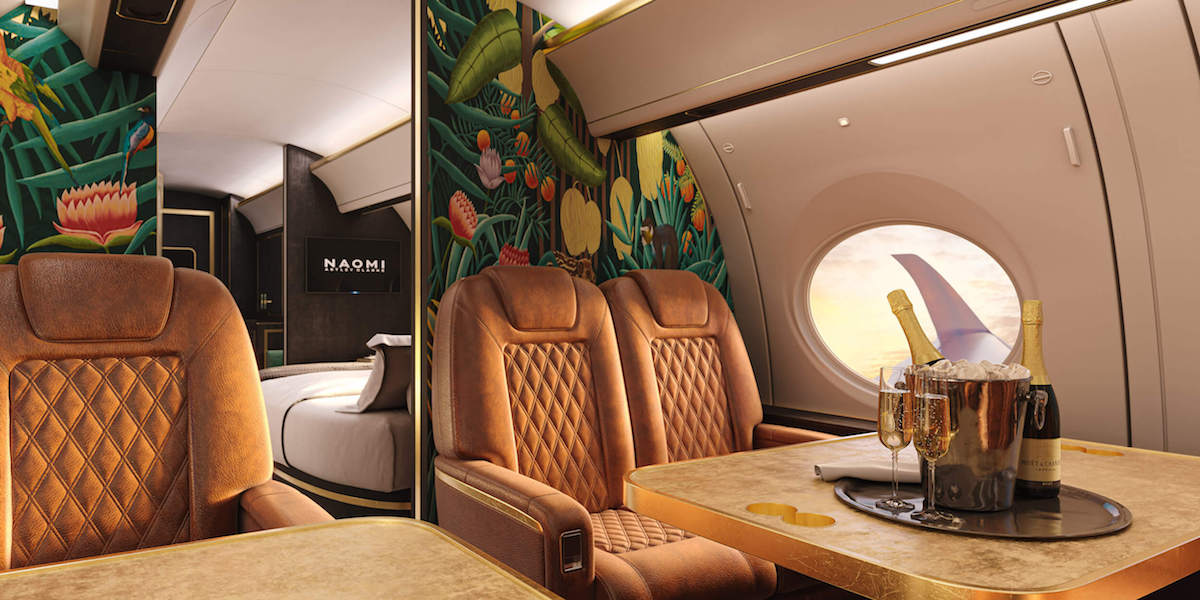 Therefore, going green is no longer a marketing choice or a fleeting fad; it has become a vital mandate. The giants of the sky are no longer just racing for Mach speeds or range; they are racing toward Net Zero commitments. But how does one remain “sustainable” without losing the “sophistication”? The answer lies in the intricate marriage of cutting-edge technology and the art of service.
If fuel was once merely energy for takeoff, it is now a brand statement. SAF (Sustainable Aviation Fuel) is currently hailed as the industry’s “liquid gold.” Derived from feedstock such as used cooking oil, animal fats, or biomass, SAF has the potential to reduce carbon emissions by up to 80% compared to traditional Jet A1 fuel. Luxury OEMs like Gulfstream and leading operators such as VistaJet and NetJets are pioneering the use of this fuel. When a Gulfstream G700 glides through the stratosphere on biofuel, performance is not compromised, yet it offers the owner absolute peace of mind: the knowledge that their journey is gentle on Mother Nature. 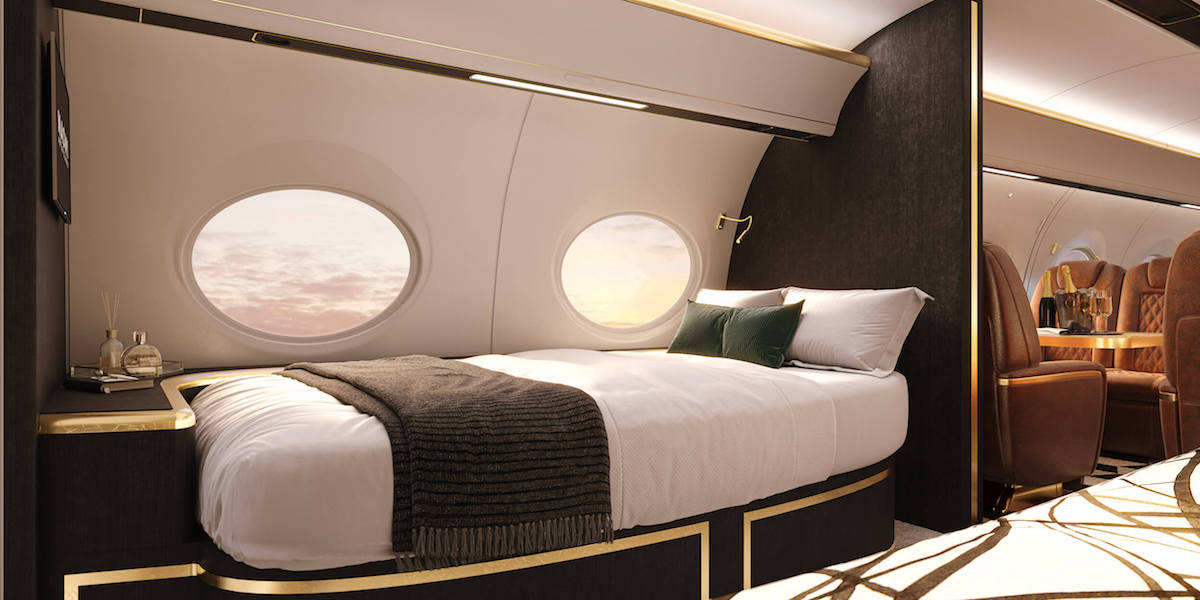 However, SAF remains expensive and scarce. An airline’s commitment to using SAF is a powerful testament to its financial strength and long-term vision, transforming “green flying” into the newest privilege of the super-rich.
In aviation, weight is the enemy of fuel efficiency. Yet, in the world of luxury, weight (solid wood, marble, silverware) has traditionally been a symbol of class. How do we reconcile this? Aircraft interior designers are leading a material revolution. Instead of heavy solid oak, they are utilizing ultra-lightweight composite veneers and 3D-printing metal components with hollow honeycomb structures that retain a polished aesthetic and eternal durability. Leather seats are now tanned using chemical-free processes, designed to be thinner yet more comfortable through advanced ergonomics. 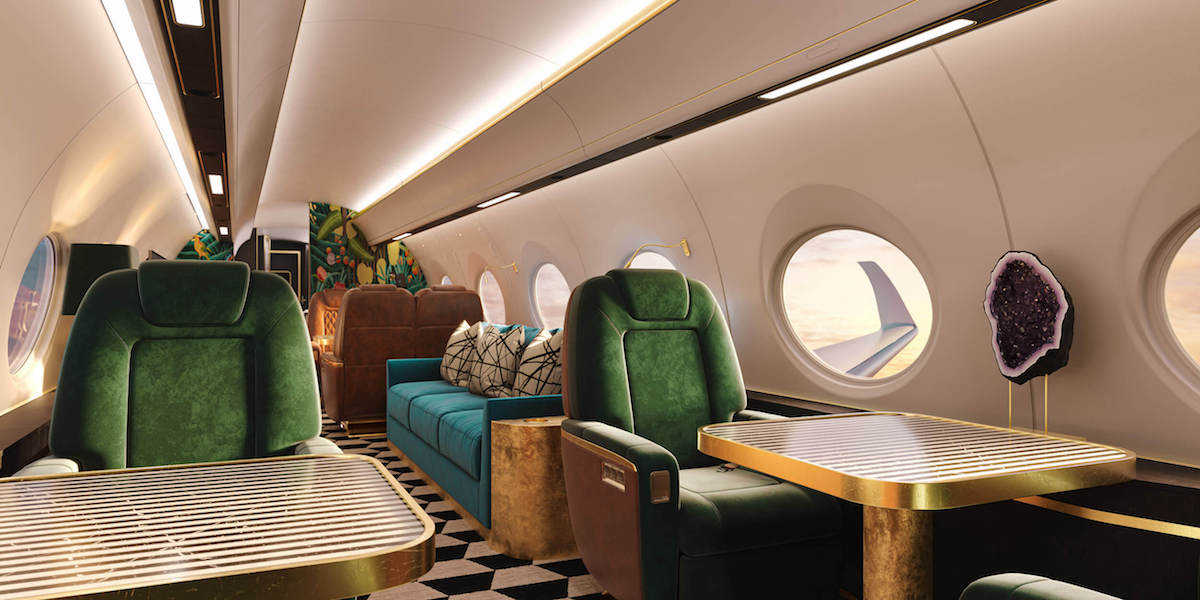 Furthermore, AI is being deployed for real-time Flight Path Optimization, leveraging tailwinds to propel aircraft faster while consuming less fuel. This is invisible sophistication: passengers enjoy absolute silence, while the aircraft performs thousands of calculations per second to glide in the “greenest” way possible.
In-flight Service is where the green revolution becomes tangible—something passengers can touch, taste, and feel. The concept of “Farm to Aero” is replacing industrial frozen meals. Five-star carriers are partnering with organic farms local to their departure points. This ensures culinary excellence while drastically cutting “food miles” (emissions from food transport). A lobster salad is delicious not just because of the Michelin-starred chef, but because of its freshness and sustainable sourcing. Moreover, luxury is defined by the artful elimination of single-use plastics. Plastic bottles are replaced by recycled crystal glass. Amenity kits are no longer generic items wrapped in nylon, but collaborations with vegan cosmetic brands, encased in canvas or plant-based leather. Luxury, in this context, is about curation and respect.
Finally, luxury operators understand that current technology cannot yet solve every emission issue. Thus, they offer clients the opportunity to “offset” proactively and transparently. It is no longer just about donating a small sum to plant trees. Modern Carbon Offset programs allow clients to invest directly in Carbon Capture technologies or the preservation of critical mangrove ecosystems.
The race to green the skies is not a temporary trend to polish brand image. It is the inevitable evolution of the concept of Luxury. True 21st-century luxury lies not in ostentatious displays of wealth, but in the depth of the experience – in the peace of mind that comes from knowing every mile flown is not a burden on the Earth. When private jets soar through the clouds, leaving behind not smog, but a commitment to a sustainable future – that is the new pinnacle of aviation that we, the architects of flying dreams, are striving toward together. > Beyond First Class: Transforming Private Jets Into “Flying Penthouses Among The Clouds”

The Best Airlines & Private Jets Awards are a globally recognized and prestigious accolade, honoring exceptional commercial airlines and private jet operators worldwide. All award titles are meticulously judged based on votes from Wanderlust Tips magazine readers and an elite panel of aviation experts, ensuring unparalleled objectivity and accuracy.
Comment Form